
How Mortgage Interest Rates Work — and Why They Move
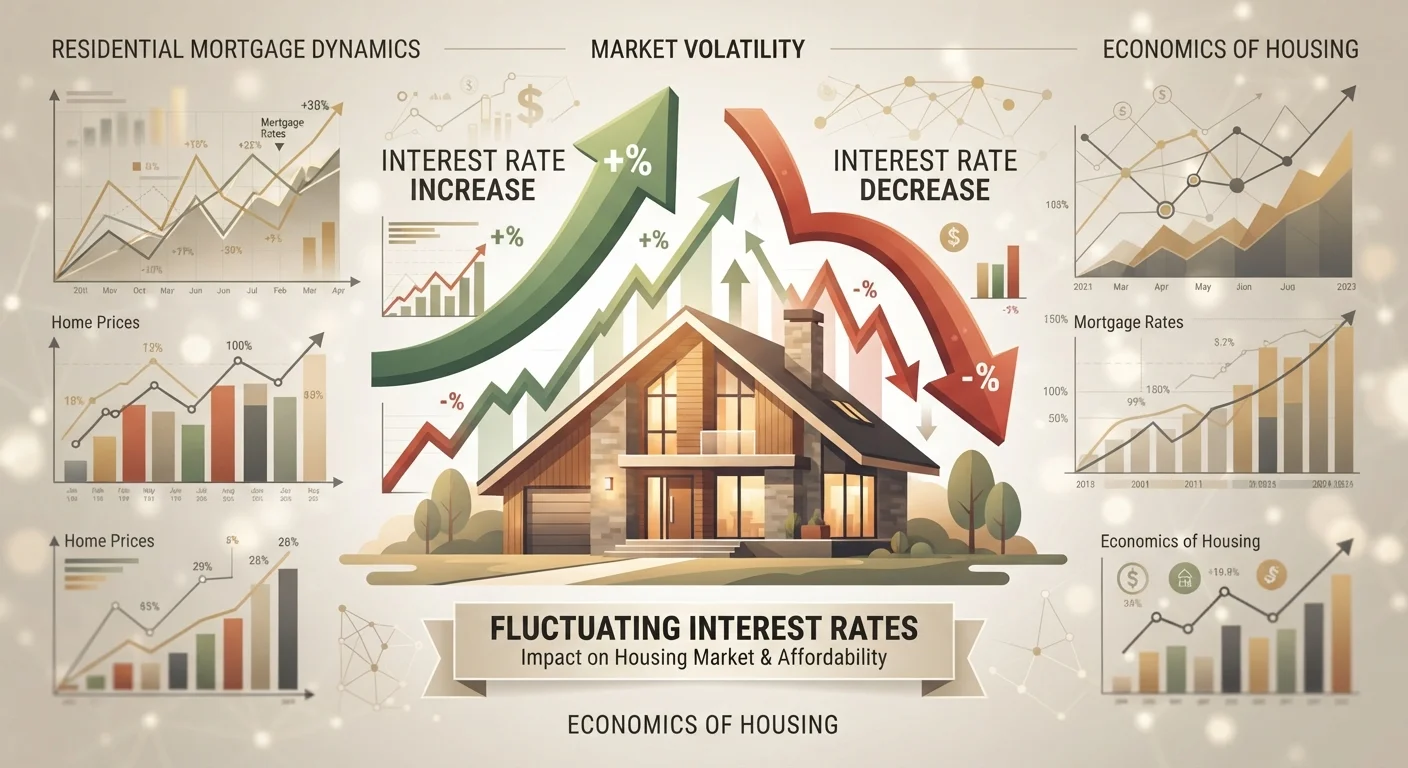
Photo credit: InfoHorizon.net | Access To Informative Content
In this article
Interest rates affect how much you'll pay over the life of a loan. This explainer walks through how they're set and what influences them.
Key Takeaways
- Mortgage rates are influenced by the Federal Reserve's policy, bond markets, inflation, and your personal credit profile.
- A 30-year fixed-rate mortgage locks in one rate; adjustable-rate mortgages (ARMs) can change after an initial period.
- Your credit score, down payment size, and loan type all directly affect the rate a lender offers you.
- Shopping multiple lenders can surface meaningfully different rate offers for the same borrower profile.
- Rates and home prices often move in opposite directions, affecting overall affordability.
The Basics: What a Mortgage Rate Actually Means
When a lender agrees to fund your home purchase, they're extending a large sum of money with the expectation of being repaid — with a profit. That profit comes primarily from interest. Your mortgage interest rate is expressed as an annual percentage of the loan balance, and it determines how much interest accrues each month.
On a $400,000 loan at a 7% fixed rate over 30 years, you'd pay roughly $558,000 in total interest alone — nearly 1.4 times the original loan amount. At 6%, that same loan generates about $464,000 in interest. That single percentage-point difference amounts to roughly $94,000 over the life of the loan. This is why even modest rate improvements matter enormously to long-term affordability.
For context on how interest compounds over time, see our explainer on how compound interest works — the same mechanics apply in reverse when you're the borrower.
~$94,000
Interest cost difference over 30 years
Estimated difference in total interest paid on a $400,000 loan at 6% versus 7% over a 30-year term, based on standard amortization calculations.
0.5–1.5%
Typical rate premium for lower credit scores
Borrowers with credit scores below 680 often face rates meaningfully higher than those offered to borrowers above 740, according to general lending industry guidelines.
~65%
Share of U.S. mortgages that are 30-year fixed
The 30-year fixed-rate mortgage has historically been the dominant product choice among American homebuyers, according to Freddie Mac loan data.
What Drives Rates at the Market Level
Mortgage rates don't emerge from a single source — they reflect a confluence of macroeconomic forces. The most direct influence is the market for mortgage-backed securities (MBS), which are bundles of home loans sold to investors. When investor demand for MBS is strong, lenders can offer lower rates; when demand falls, rates rise to attract buyers.
The 10-year U.S. Treasury yield is closely watched as a benchmark. Mortgage rates typically track several percentage points above it, and when Treasury yields climb — often due to inflation fears or stronger economic data — mortgage rates tend to follow.
The Federal Reserve's monetary policy matters indirectly. The Fed sets the federal funds rate, which affects short-term borrowing costs across the economy. When the Fed raises rates to combat inflation, it tends to push mortgage rates higher as well, though the relationship isn't one-to-one. For a broader view of how these forces interact with home prices, see our analysis at why home prices rise and fall.
“Mortgage rates are ultimately a price for risk and time. They reflect what investors demand to tie up capital in long-term loans, adjusted for inflation expectations and the creditworthiness of individual borrowers.”
— Housing Finance Policy Expert, Researcher specializing in U.S. mortgage markets
Your Personal Rate: What Lenders Look At
Market forces establish a general range for rates on any given day, but the specific rate you're offered depends on factors unique to you and your loan.
- Credit score: The single most influential personal factor. Higher scores signal lower risk and unlock lower rates.
- Down payment: A larger down payment reduces lender risk. Putting down 20% or more typically results in better rate offers and eliminates private mortgage insurance (PMI).
- Loan type and term: A 15-year loan generally carries a lower rate than a 30-year loan. Government-backed loans (FHA, VA, USDA) have their own rate structures and qualifying requirements.
- Debt-to-income ratio (DTI): Lenders evaluate how much of your gross income is already committed to existing debt obligations. Lower DTI ratios are viewed more favorably.
- Property type and use: Investment properties and second homes typically command higher rates than primary residences.
Get at Least Three Loan Estimates
Federal rules require lenders to provide a standardized Loan Estimate within three business days of receiving your application. Comparing Loan Estimates from multiple lenders — not just the rate, but fees, APR, and closing costs — gives you real leverage and a clearer picture of the total cost of each offer.
It's worth noting that mortgage rates differ from auto loan rates in structure and duration. For a direct comparison of loan mechanics, our guide on how auto financing works explains the key differences.
Fixed vs. Adjustable: Choosing the Right Structure
Most American homebuyers choose a 30-year fixed-rate mortgage because it provides payment certainty across the life of the loan. Your rate — and therefore your principal-and-interest payment — never changes, regardless of what happens in the broader market.
Adjustable-rate mortgages (ARMs) offer an initial fixed period (commonly 5, 7, or 10 years) at a rate that's usually lower than comparable fixed-rate loans. After that period, the rate adjusts annually based on a published index, subject to caps on how much it can move each year and over the loan's lifetime. ARMs carry more uncertainty but can be appropriate for buyers who plan to sell or refinance within the fixed period.
The housing market conditions at the time you buy may also inform this choice — in a rising-rate environment, locking in a fixed rate has historically been a common priority for buyers seeking long-term stability.
Rate Locks Have Limits and Conditions
A rate lock typically lasts 30 to 60 days, which should cover most standard purchase timelines. Extended locks are available but usually come at a cost. If your closing is delayed beyond the lock period, you may need to pay to extend it or accept the current market rate. Confirm lock terms in writing with your lender before proceeding.
This article is for general informational purposes only and does not constitute financial or mortgage advice. Consult a qualified mortgage professional or financial adviser before making decisions about a home loan.
Frequently Asked Questions

Author
Real Estate Editorial Team
Real Estate Editorial Team is the collective byline for our editorial team and contributor network. Articles published under this byline or an editorial pen name are researched, written, and reviewed according to our editorial standards for clarity, consistency, and independence before publication.
View all articles →