
Evaluating a Neighborhood Before You Buy
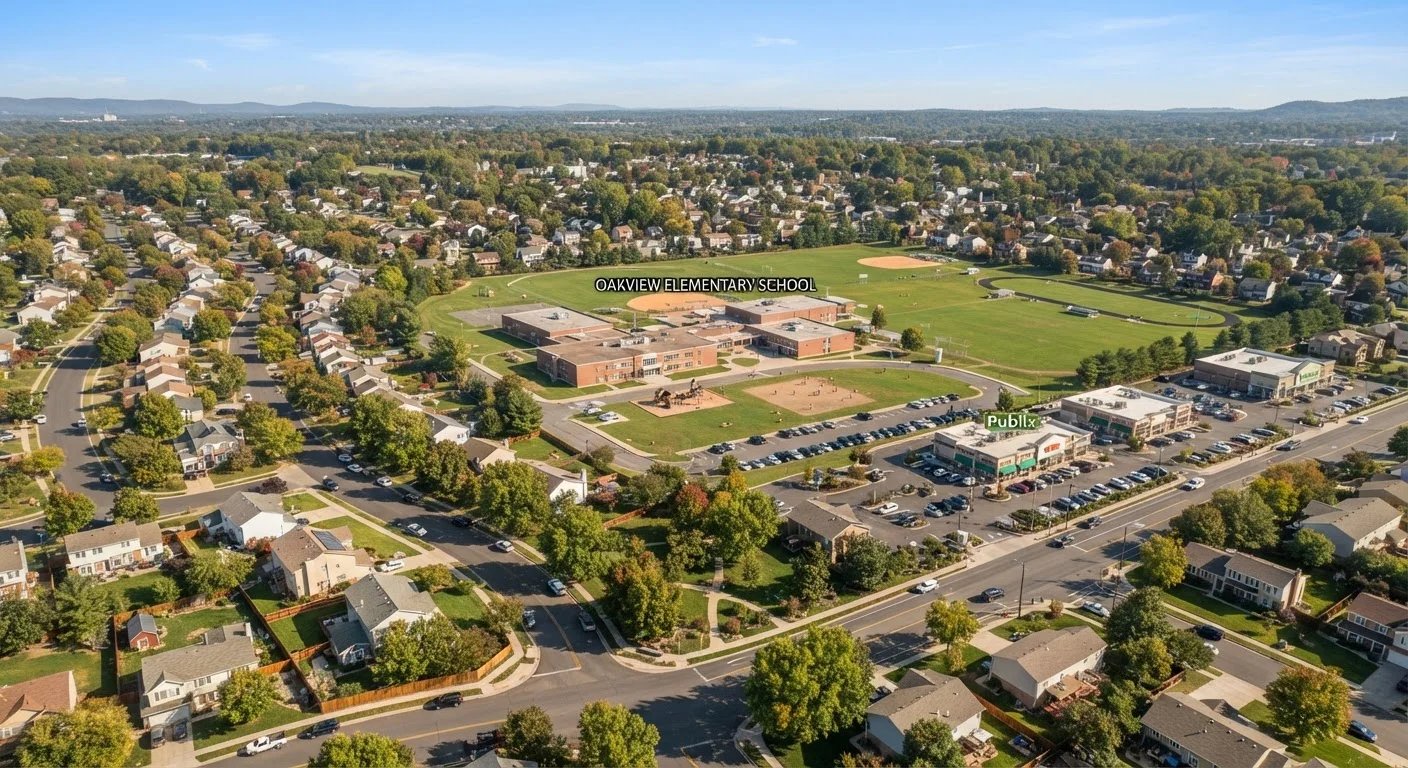
Photo credit: InfoHorizon.net | Access To Informative Content
In this article
Schools, commute times, and walkability are just the start. A practical approach to researching the community around a home you're considering.
Key Takeaways
- Neighborhood quality directly affects your daily life, resale value, and long-term satisfaction with a home purchase.
- Public data on schools, crime, flood zones, and zoning is freely available and worth reviewing before making an offer.
- Visiting at different times of day reveals conditions that online research alone cannot capture.
- Commute, walkability, and proximity to services vary significantly even within the same zip code.
- Local market trends — not just the home's price — should factor into your evaluation.
Why the Neighborhood Deserves Its Own Due Diligence
When evaluating a home, it is easy to focus on square footage, kitchen finishes, and roof age. But the neighborhood surrounding that home will shape your daily experience — and your equity — for as long as you own it. A well-priced home in a declining area can be a poor long-term investment, while a modest home in a thriving community often appreciates steadily over time.
This kind of community-level research pairs naturally with the broader homebuying process. Our complete stage-by-stage homebuying guide covers what happens from search to closing; this article zooms in specifically on neighborhood evaluation as a distinct, structured task within that process.
Before walking through the steps below, gather the tools and resources you'll need:
State or county GIS/parcel viewer
Look up zoning designations, flood plain maps, and property boundary data for any address.
FEMA Flood Map Service Center (msc.fema.gov)
Determine whether a property falls within a federally designated flood zone, which affects insurance costs.
School district website or state report card portal
Review enrollment data, test performance trends, and per-pupil spending for local public schools.
Walk Score or local transit authority maps
Gauge walkability and access to public transportation from a specific address.
Local police department crime dashboard
Review reported incident data by neighborhood and crime category over time.
Step-by-Step: How to Evaluate Any Neighborhood
Follow these steps in sequence. Some can be done from your home office; others require an in-person visit. Together they give you a layered, data-backed picture of where you may be putting down roots.
Check zoning and future development plans
Visit your county or municipality's GIS portal and look up the zoning designation for the property and surrounding parcels. A single-family zone signals residential stability; commercial or mixed-use zoning nearby can mean future construction that changes traffic patterns, noise, or character. Many municipalities publish long-range comprehensive plans that outline where growth is directed over the next decade — worth reviewing before you commit.
Review flood zone status and environmental data
Use the FEMA Flood Map Service Center to check whether the address is in a Special Flood Hazard Area (SFHA). Properties in high-risk flood zones require federally backed flood insurance if the mortgage is from a federally regulated lender — an added cost that can run hundreds to over a thousand dollars annually. Also check your state's environmental databases for any brownfield sites, contaminated groundwater, or industrial activity in close proximity.
Research local schools regardless of whether you have children
School district quality influences property values even for buyers without school-age children. Review state-published school report cards for enrollment trends, funding stability, and standardized assessment trajectories over several years. Declining enrollment or a pattern of budget referenda failures can signal broader demographic shifts worth understanding.
Analyze crime data by specific incident type and trend
Many local police departments publish crime dashboards broken down by category — property crime, violent crime, vehicle theft — and searchable by street or precinct. Look at trends over two to three years rather than a single year's snapshot. A neighborhood with historically moderate crime but a recent downward trend may be a better risk than one showing a flat or rising pattern.
Map your actual commute and access to services
Don't rely on estimated drive times from a mapping app during off-peak hours. If you commute to a fixed location, test the route yourself during the actual time you'd be traveling. Note whether public transit is genuinely viable — check schedules, frequency, and reliability with your local transit authority. Identify where the nearest grocery store, urgent care clinic, pharmacy, and library are located, and consider whether that access matches your lifestyle.
Visit at multiple times of day and on different days
Drive or walk through the neighborhood on a weekday morning, a weekday evening, and a weekend afternoon. Observe parking availability, foot traffic, noise levels, street maintenance, and general upkeep of surrounding properties. Speak briefly with people you encounter — neighbors are often the most candid source of information about what daily life there is actually like.
Track Your Observations Systematically
Use a simple spreadsheet or note-taking app to score each neighborhood across the same criteria. Comparing two or three neighborhoods side by side — rather than from memory — leads to clearer, more confident decisions. Include both quantitative findings (flood zone, school rating) and qualitative impressions from your site visits.
What the Data Can and Cannot Tell You
Public records and online tools are powerful starting points, but they have limits. Crime statistics reflect reported incidents only. School ratings capture one slice of educational quality. Walkability scores don't account for personal safety perceptions or seasonal conditions. Use the data as context, not verdict.
Local market conditions add another layer of insight. Before making an offer, reviewing current supply, pricing trends, and days-on-market in the specific neighborhood — not just the metro area — can reveal whether you're entering a competitive pocket or a softer one. Our market check-in guide walks through exactly which data points matter most.
Online Ratings Are Starting Points, Not Verdicts
Third-party neighborhood ratings and school scores aggregate data in ways that can mask important nuances — or reflect outdated conditions. Always cross-reference with primary sources such as government portals, district websites, and police department data. On-the-ground observation remains irreplaceable.
Finally, consider your own priorities honestly. Proximity to good schools matters enormously to families with children, but less so for buyers who work from home and prioritize walkable retail. There is no universally correct neighborhood — only the one that aligns with your specific needs and timeline. If you are still weighing whether buying makes sense for you at all, a balanced look at renting versus buying can help clarify that decision before you proceed.

Author
Real Estate Editorial Team
Real Estate Editorial Team is the collective byline for our editorial team and contributor network. Articles published under this byline or an editorial pen name are researched, written, and reviewed according to our editorial standards for clarity, consistency, and independence before publication.
View all articles →