
Why Your Tomatoes Keep Splitting Before You Can Pick Them
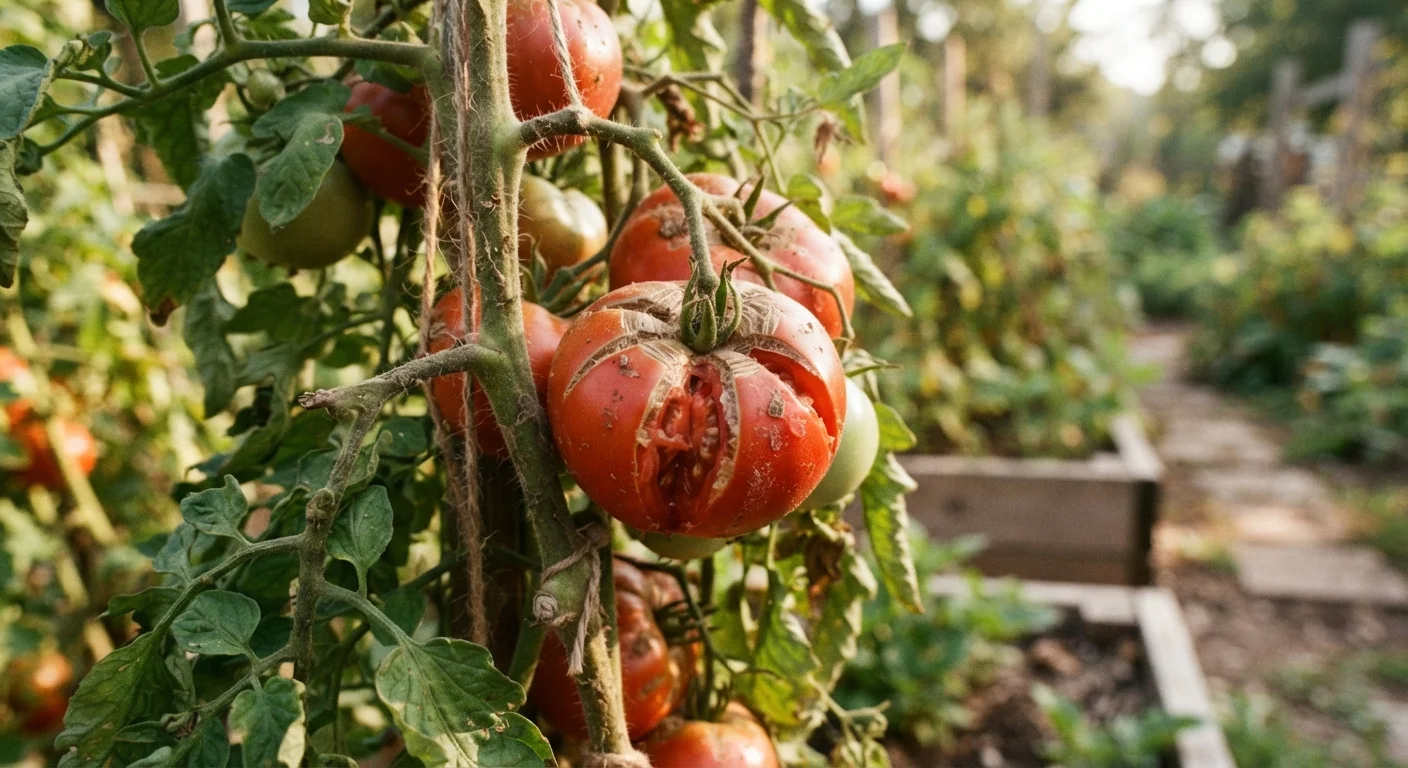
Photo credit: InfoHorizon.net | Access To Informative Content
Cracked tomatoes are a common frustration. Learn the watering, soil, and weather factors behind fruit splitting and how to prevent it.
Key Takeaways
- Tomato splitting is almost always caused by sudden, uneven moisture reaching the fruit after a dry spell.
- Consistent watering, mulching, and soil management prevent most cracking before it starts.
- Harvesting tomatoes slightly early during wet stretches can save fruit you'd otherwise lose.
- Some tomato varieties are bred for thicker skins and stronger resistance to splitting.
What's Actually Happening When Tomatoes Split
When a tomato cracks — whether in a starburst pattern from the stem (radial cracking) or in rings around the fruit (concentric cracking) — it's responding to a sudden surge of water. The flesh inside expands faster than the skin can stretch, and the skin gives way. This typically happens after a heavy rain or a generous watering session that follows a dry period. The fruit essentially outgrows its own outer layer in a matter of hours.
Understanding this mechanism is the first step to preventing it. Splitting isn't a disease, a pest problem, or bad luck — it's almost always a symptom of inconsistent moisture reaching the plant's root zone. That's reassuring, because it means the fix is largely in your hands.
Letting the soil dry out completely between waterings.
Why it happens: Gardeners often underwater during heat waves, assuming tomatoes are drought-tolerant. When rain finally arrives or watering resumes, the parched plant absorbs water rapidly.
Skipping mulch around tomato plants.
Why it happens: Mulching feels like an optional finishing step, so many gardeners skip it to save time or material. Without it, soil moisture swings wildly between waterings.
Fertilizing with too much nitrogen late in the season.
Why it happens: Gardeners sometimes add high-nitrogen fertilizer hoping to boost yields, not realizing it pushes rapid leafy and fruit growth that skin can't keep pace with.
Waiting too long to harvest tomatoes showing early color change.
Why it happens: Many gardeners believe vine-ripened means waiting until a tomato is fully red. Holding fruit on the vine through a rain event after dry weather is a recipe for splitting.
Planting only split-prone heirloom varieties without extra management.
Why it happens: Heirlooms are popular for their flavor, but many have thin, delicate skins that crack easily under moisture stress. Gardeners aren't always warned about this trade-off.
How to Stop Splitting in Its Tracks
Most splitting problems respond well to the same core approach: keep soil moisture as steady as possible throughout the season. A 2–3 inch layer of organic mulch (straw, shredded leaves, or wood chips) around the base of each plant dramatically slows evaporation between waterings and buffers the soil from heavy downpours. Think of mulch as a shock absorber for your watering schedule.
Avoid Overwatering After a Dry Spell
When soil has been dry for several days, resist the urge to flood plants with extra water to compensate. A sudden large dose causes the same rapid moisture surge as a heavy rainstorm — and can trigger splitting just as quickly. Return to your normal, consistent schedule and let the plant recover gradually.
Drip irrigation or soaker hoses deliver water slowly and directly to the root zone, which reduces the feast-or-famine cycle that leads to cracking. If you're hand-watering, aim for deep, slow sessions rather than quick surface splashes — infrequent deep watering encourages roots to grow down where moisture is more stable.
During a prolonged wet spell, consider harvesting tomatoes that have reached the "breaker stage" — when color has just begun to change from green to pink or red. Tomatoes ripen beautifully on a countertop at room temperature and won't split once they're off the vine. This is especially useful if you're seeing heavy rain in the forecast after a dry week.
Finally, when choosing varieties for next season, look for types noted for crack resistance. Many modern hybrid tomatoes are specifically bred with thicker, more elastic skins. Heirloom varieties tend to be more prone to splitting, though their flavor often makes the extra attention worthwhile. To keep your whole garden thriving, it also helps to understand related moisture issues — like the warning signs of overwatering, which can compound stress on tomato plants and make splitting more likely.

Author
Home & Garden Editorial Team
Home & Garden Editorial Team is the collective byline for our editorial team and contributor network. Articles published under this byline or an editorial pen name are researched, written, and reviewed according to our editorial standards for clarity, consistency, and independence before publication.
View all articles →