
Spice Rack Essentials: What Each Spice Actually Does in a Dish
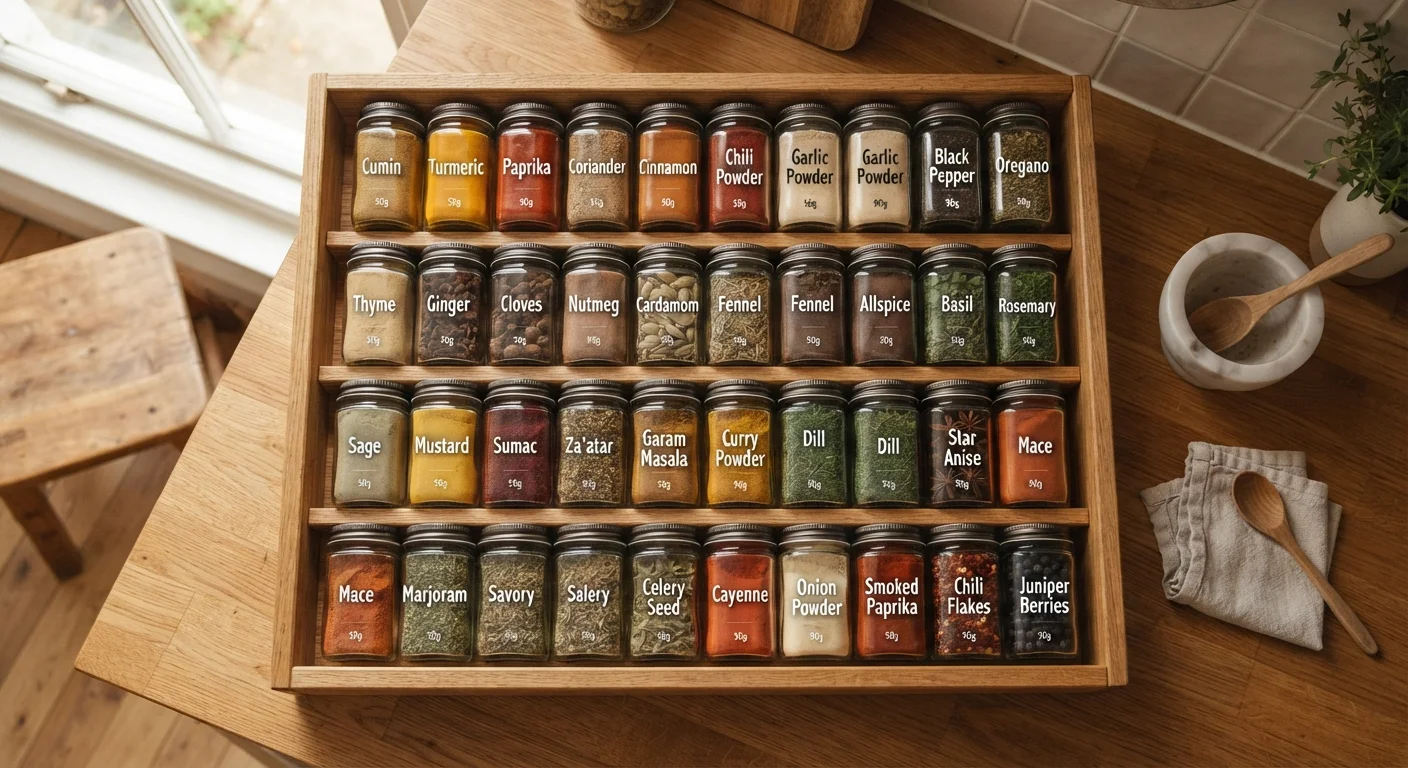
Photo credit: InfoHorizon.net | Access To Informative Content
In this article
A practical reference covering the flavor role of common pantry spices — from cumin and smoked paprika to turmeric and coriander.
Why Spices Do More Than Add Heat
Most home cooks reach for spices on instinct — a pinch of cumin here, some paprika there — without a clear picture of what each one is actually contributing. That instinct improves dramatically once you understand that spices perform distinct, specific jobs in a dish: some build a savory base, some add brightness or warmth, and some affect color and perceived richness more than flavor itself.
Understanding those roles lets you troubleshoot a flat-tasting dish, substitute confidently, and season with intention rather than habit. This guide breaks down the most essential pantry spices and what they're actually doing when you add them to food. For a broader look at how flavor works as a system, see Salt, Fat, Acid, Heat: Understanding the Four Pillars of Flavor.
| Shelf life of ground spices | 1–2 years (airtight, away from heat and light) (General food science guidance) |
| Shelf life of whole spices | 3–5 years (General food science guidance) |
| Blooming technique | Toast in dry pan or warm oil 30–60 seconds before adding liquids |
| Most versatile pantry spice | Cumin — appears in Mexican, Indian, Middle Eastern, and North African cooking |
| Color vs. flavor spice | Turmeric contributes more color than taste; smoked paprika does both |
The Core Pantry Spices — and Their Actual Jobs
Here's what each spice contributes in practical cooking terms:
Cumin
Cumin provides an earthy, slightly bitter, warm base note that anchors savory dishes. It's the structural backbone of many spice blends — chili, taco seasoning, garam masala — and blooms especially well in hot oil or a dry pan.
Smoked Paprika
Made from dried, smoked red peppers, smoked paprika contributes deep color, mild sweetness, and a wood-smoke complexity. It adds perceived richness without fat and is especially effective in braises, rubs, and roasted vegetables.
Turmeric
Turmeric's primary contribution is a vivid golden color and a faintly bitter, earthy undertone. Its flavor is mild on its own but it reinforces other spices in a blend; it's a key component in curry powders and golden milk preparations.
Coriander
Ground coriander (from dried cilantro seeds) adds a warm, citrusy, slightly floral note that bridges savory and bright flavors. It rounds out heavier spices like cumin and is foundational in Middle Eastern and South Asian cooking.
Cinnamon
Cinnamon adds warmth and sweetness, but in savory cooking — tagines, moles, spiced braises — it adds aromatic depth without tasting obviously sweet. A small amount lifts the perceived complexity of a dish without drawing attention to itself.
Cayenne
Cayenne delivers clean, direct heat with very little flavor beyond spiciness. It's used to control heat level precisely; unlike chili powder (a blend), cayenne is a single ingredient and its effect is immediate and straightforward.
Garlic Powder
Garlic powder provides consistent, mellow, savory depth throughout a dish. Unlike fresh garlic, it disperses evenly into dry rubs and spice blends without the sharpness or moisture of fresh cloves.
Black Pepper
Black pepper provides a sharp, pungent heat that stimulates the palate and makes other flavors more vivid. Freshly ground pepper is significantly more aromatic than pre-ground, which loses volatile oils quickly.
A few principles hold across all of these: whole spices stay potent longer than ground; blooming spices briefly in a dry pan or warm oil before adding other ingredients deepens their aroma significantly; and ground spices begin losing their punch after about a year on the shelf. If a dish tastes flat despite correct seasoning, dull spices are often the culprit.
How to Use This Knowledge at the Stove
Once you know what a spice does, you can diagnose flavor problems more reliably. A chili that tastes thin and one-dimensional probably needs more cumin and smoked paprika to deepen its savory base — not more chili powder. A curry that smells muddy rather than bright may need coriander and a touch of turmeric balanced out. A roasted vegetable dish that seems flat could benefit from finishing with a light dusting of smoked paprika rather than more salt.
When substituting, match the function, not just the category. If you're out of coriander, adding a small amount of caraway seed (also earthy and citrus-adjacent) gets closer than reaching for cumin, which plays a different structural role.
Finally, spices work alongside other flavor-builders, not instead of them. Salt is not a spice — it's a flavor amplifier that makes every other element perform better. Understanding how each ingredient in your pantry functions gives you far more creative and corrective control than any recipe can offer on its own. For a look at how ingredient sourcing and labeling connects to these basics, reading an ingredient list can help you decode spice blends found in packaged foods.
Spice Blends vs. Single Spices
Pre-mixed blends like chili powder, curry powder, and garam masala combine several spices in set ratios. They're convenient but less adjustable. Once you know what each component does, you can build or adjust blends to match your own palate — more cumin for earthiness, more coriander for brightness, and so on. Reading a blend's ingredient list in order of quantity gives you a clear picture of its dominant character.

Author
Food Editorial Team
Food Editorial Team is the collective byline for our editorial team and contributor network. Articles published under this byline or an editorial pen name are researched, written, and reviewed according to our editorial standards for clarity, consistency, and independence before publication.
View all articles →