
Healthy Snacking: What Makes a Snack Actually Nourishing
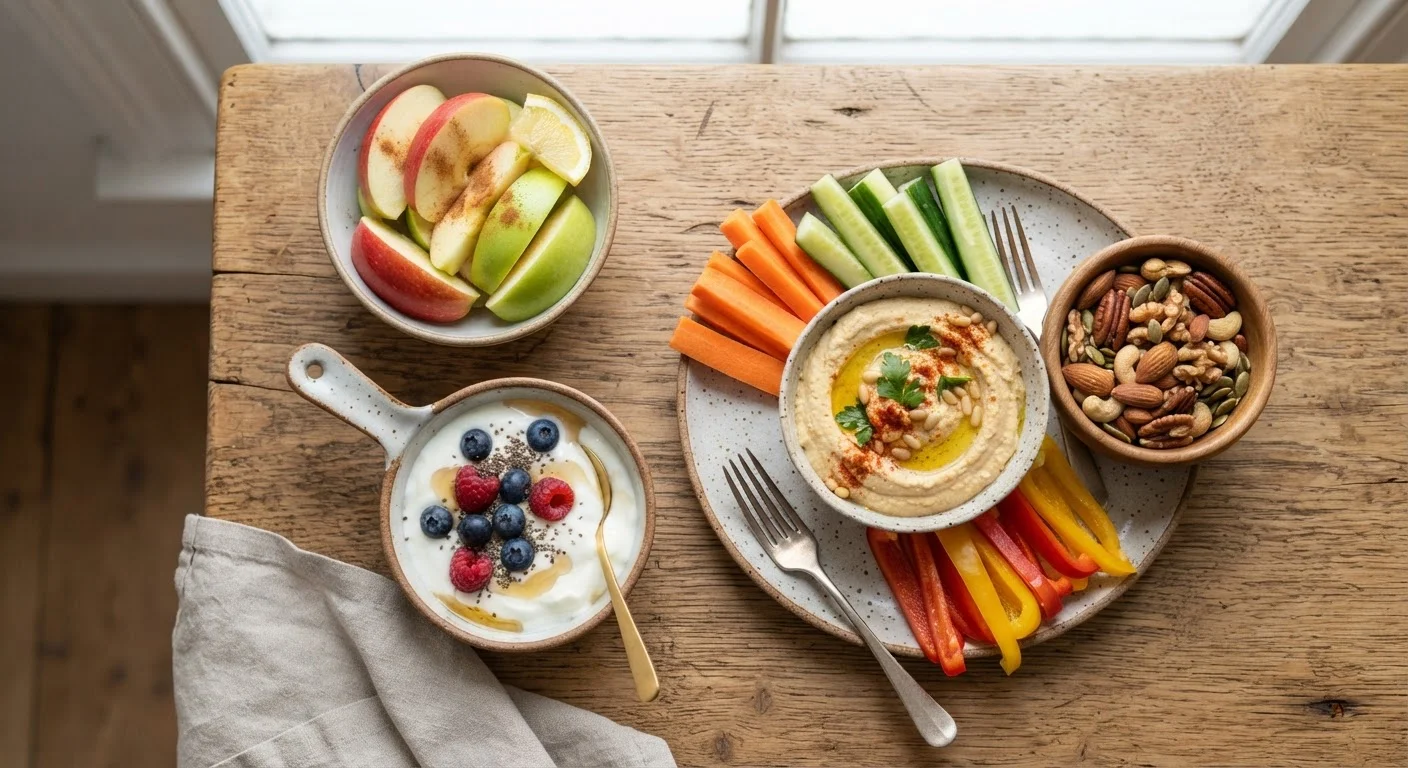
Photo credit: InfoHorizon.net | Access To Informative Content
Eight characteristics of genuinely nutritious snacks, with examples to help you move past empty-calorie habits.
Key Takeaways
- A nourishing snack provides meaningful nutrients, not just calories or fleeting satisfaction.
- Protein, fiber, and healthy fats are the three pillars that make a snack genuinely filling.
- Minimally processed snacks with short ingredient lists tend to deliver more nutritional value.
- Portion awareness matters — even wholesome foods can displace appetite for balanced meals.
- Pairing food groups (e.g., fruit with nuts) improves satiety and stabilizes blood sugar.
- Planning snacks ahead reduces reliance on ultra-processed convenience options.
Why Most Snacks Fall Short
Americans snack more than ever, yet much of what passes for a snack — crackers, chips, candy bars, flavored rice cakes — delivers a quick energy spike followed by a crash. These foods are designed for palatability, not nourishment. The result is that many people eat between meals and still feel hungry, fatigued, or unsatisfied an hour later.
A genuinely nourishing snack does more than fill a gap in your schedule. It contributes meaningful nutrients — protein, fiber, vitamins, minerals, or healthy fats — that support energy, focus, and appetite regulation across the day. Understanding what separates nutritious snacks from empty-calorie ones puts you in control of that decision every time you open a cupboard or reach for something on the go.
This article breaks down eight evidence-based characteristics of snacks that actually serve your body, with practical examples for each. For a broader view of how snacking fits into your overall eating habits, see our guide on healthy eating habits that hold up over time.
Build Snacks Around Two Food Groups
Pairing two different food groups — such as a fruit with a protein, or a vegetable with a fat — consistently outperforms single-food snacks for satiety and nutritional breadth. Try apple slices with almond butter, or celery sticks with hummus. This two-component rule is simple enough to apply anywhere, including at work or while traveling.
Eight Characteristics of a Genuinely Nourishing Snack
It contains a meaningful source of protein
Protein slows digestion and triggers satiety hormones, making it the single most effective nutrient for keeping hunger at bay between meals. A snack with at least a few grams of protein performs measurably better at reducing overeating at the next meal compared to a carbohydrate-only option.
Practical examples include Greek yogurt, a hard-boiled egg, a small handful of edamame, cottage cheese, or a tablespoon of nut butter paired with apple slices.
Protein is the most effective nutrient for keeping hunger at bay between meals.
It includes dietary fiber
Fiber adds physical bulk to food, slows the release of glucose into the bloodstream, and feeds beneficial gut bacteria. Most Americans fall well short of recommended daily fiber intakes, making snack time a useful opportunity to close that gap.
Whole fruits, raw vegetables, legumes, and whole grains all contribute fiber. A small pear, a handful of baby carrots with hummus, or a few whole-grain crackers with avocado are simple, fiber-rich choices.
Snack time is a practical opportunity to close the fiber gap most Americans face.
It provides healthy fats
Dietary fat is calorie-dense, but unsaturated fats — found in nuts, seeds, avocados, and olive oil — support cardiovascular health, help absorb fat-soluble vitamins (A, D, E, and K), and contribute to satiety. A snack that combines fat with protein or fiber sustains energy far longer than a fat-free, high-sugar alternative.
A small portion of mixed nuts, a quarter of an avocado on whole-grain toast, or a few olives are examples of snacks where fat works in your favor.
Unsaturated fats slow digestion and help your body absorb fat-soluble vitamins.
It is minimally processed
The degree of processing matters. Ultra-processed snacks are engineered to maximize palatability while often stripping out fiber and adding sodium, refined sugars, and synthetic additives. Minimally processed foods — those close to their natural state — retain more of their original nutrient profile.
Choosing a handful of walnuts over a walnut-flavored snack bar, or whole fruit over a fruit-flavored gummy, is a reliable way to apply this principle. Short ingredient lists with recognizable items are a practical proxy for minimal processing.
Short ingredient lists with recognizable items are a reliable sign of minimal processing.
It is appropriate in portion size
Even nutritious foods contribute excess calories when portions are unchecked. Nuts are a good example: they are rich in beneficial fats and protein, but a single serving is typically a small handful (roughly one ounce), not an unlimited stream from the bag. The goal is a snack that bridges meals — not a second lunch.
Pre-portioning snacks into small containers, especially for calorie-dense foods like nuts, cheese, or dried fruit, removes the guesswork and supports mindful eating.
A nourishing snack bridges meals — it shouldn't function as a second full meal.
It has low added sugar
Added sugars — those not naturally present in whole foods — are linked to energy crashes, increased caloric intake, and, at high levels over time, adverse metabolic effects. Many snacks marketed as healthy (granola bars, flavored yogurts, fruit snacks) carry substantial added sugar loads.
Reading the nutrition facts label and distinguishing between "total sugars" and "added sugars" is key. Naturally sweet options like whole fruit deliver sugar alongside fiber, water, and micronutrients that change how your body processes it.
Natural fruit sugars come packaged with fiber and water — added sugars do not.
It fits your actual hunger level
A nutritious snack is also one that responds to genuine physiological hunger rather than habit, boredom, or stress. Eating something wholesome when you are not actually hungry still adds calories without addressing the underlying need.
Before reaching for a snack, a brief pause to assess hunger on a simple scale can be informative. If hunger is mild-to-moderate, a small, balanced snack makes sense. If it is low, water or a short break may be more appropriate. This kind of awareness is a foundational component of sustainable healthy eating patterns.
Pausing to assess true hunger before snacking is itself a nutritional skill.
It is something you can realistically prepare or access
Nutritional value means nothing if the snack never makes it into your hand. Practicality is a genuine feature of a good snack. Fresh-cut vegetables are more nutritious than chips, but if you never have time to prepare them, they are also rarely eaten.
Batch-prepping snacks on weekends — portioning nuts, washing fruit, cutting vegetables — significantly improves follow-through during busy weeks. For more on fitting nutritious food into a demanding schedule, see eating well on a busy schedule. If cost is a factor, eating well on a budget offers strategies to keep wholesome options accessible.
The most nutritious snack is one you will actually eat — practicality is non-negotiable.
Snacking Is Highly Individual
Not everyone needs to snack between meals. Some people naturally thrive on two or three larger meals; others do better with small, frequent eating episodes. Factors like activity level, medications, age, and metabolic health all influence whether snacking is appropriate and what form it should take. A registered dietitian can help you determine what snacking pattern fits your specific circumstances.
This article is for general informational and educational purposes only and is not a substitute for professional medical or dietary advice. Consult a qualified healthcare provider or registered dietitian for guidance tailored to your individual health needs.

Author
Health Editorial Team
Health Editorial Team is the collective byline for our editorial team and contributor network. Articles published under this byline or an editorial pen name are researched, written, and reviewed according to our editorial standards for clarity, consistency, and independence before publication.
View all articles →