
Journaling for Mental Clarity: Formats That Actually Help
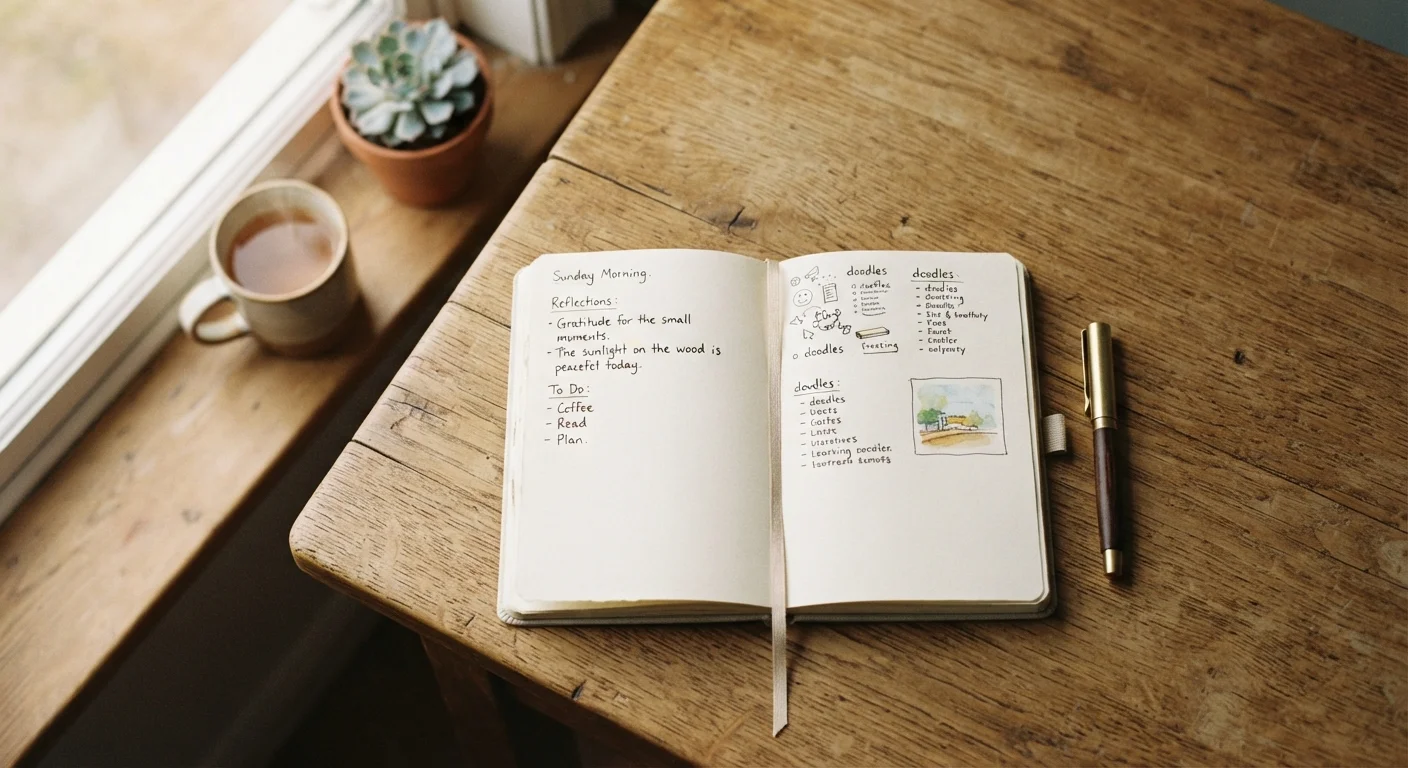
Photo credit: InfoHorizon.net | Access To Informative Content
In this article
From free-writing to gratitude logs, different journaling styles serve different emotional needs. Find out which approach fits your situation.
Key Takeaways
- Different journaling formats serve different emotional needs — no single approach works for everyone.
- Free-writing helps process overwhelming emotions, while structured formats suit goal-tracking and reflection.
- Gratitude journaling has measurable research support for improving mood and reducing stress.
- Consistency matters more than length — even five minutes a day can yield mental clarity benefits.
- Journaling is a wellness tool, not a replacement for professional mental health care.
Why Journaling Works — The Science Behind It
Writing about your thoughts and feelings engages the brain's prefrontal cortex — the region associated with reasoning and emotional regulation. This process, sometimes called affect labeling, helps reduce the intensity of negative emotions by naming them explicitly. Research published in psychological journals has consistently linked expressive writing with reduced stress, improved working memory, and greater overall well-being.
That said, not all journaling is created equal. The format you choose shapes what you get out of the practice. For a broader foundation on mental wellness habits, see our comprehensive mental well-being overview.
~15%
Reduction in stress symptoms from expressive writing
A meta-analysis of expressive writing studies found meaningful reductions in psychological distress compared to control groups.
3x/week
Gratitude journaling frequency linked to mood gains
Research by psychologist Robert Emmons found that writing gratitude entries three times per week produced greater well-being benefits than daily writing in some samples.
Four Core Journaling Formats Compared
Each format below targets a distinct mental goal. Understanding their trade-offs helps you choose — or rotate — approaches based on what you need most right now.
| Free-Writing | Gratitude Journaling | Prompt-Based | Bullet/Mood Log | |
|---|---|---|---|---|
| Time required | 10–20 min | 5–10 min | 10–15 min | 2–5 min |
| Best emotional use | Processing overwhelm | Building positivity | Deepening self-insight | Tracking patterns |
| Structure level | None | Light | Moderate | High |
| Research support | Strong (expressive writing) | Strong (positive psych) | Moderate | Emerging |
| Beginner-friendly | Moderate | High | High | Very high |
| Reveals patterns over time | Low | Moderate | Moderate | High |
Free-Writing involves writing continuously for a set period — typically 10 to 20 minutes — without editing or stopping. The goal is to drain mental noise, not produce polished prose. It's particularly effective when anxiety feels vague or circular, because the act of externalizing thoughts often reveals their root.
Gratitude Journaling asks you to record three to five specific things you appreciated in a given day. Studies in positive psychology suggest this practice gradually rewires attentional bias away from threats and toward positive experiences. Specificity matters: "my neighbor shoveled my walk" outperforms "I'm grateful for kindness" in terms of emotional impact.
Prompt-Based Journaling uses a question or sentence starter to guide reflection — for example, "What drained my energy today, and why?" This format suits people who find blank pages paralyzing and benefits from the consistency of a structured routine. You can pair it with our weekly mental health check-in framework to deepen self-awareness.
Bullet/Mood Journaling uses symbols, short phrases, or numerical scales to log mood, sleep, energy, and events. It requires minimal time and creates a visual record that reveals patterns — like noticing that your mood consistently dips mid-week or after certain social situations.
Choosing the Right Format for Your Situation
Start Small to Build the Habit
If a blank page feels daunting, commit to just five minutes and a single sentence. Habit research consistently shows that lowering the entry barrier — what researchers call reducing "friction" — is more predictive of long-term consistency than motivation alone. Keep your journal somewhere visible, and anchor the habit to an existing routine like morning coffee or winding down before bed.
The most effective journaling format is the one you'll actually return to. Here's a simple framework for matching format to circumstance:
- High stress or emotional intensity: Start with free-writing to discharge mental load before attempting any structured reflection.
- Feeling emotionally flat or unmotivated: Gratitude journaling provides gentle re-engagement without demanding deep introspection.
- Wanting to build self-knowledge: Prompt-based formats generate insight systematically over time.
- Tracking mental health trends: Bullet or mood journaling provides the data layer that other formats lack.
There's no rule against mixing formats. Many people free-write for five minutes, then close with three gratitude entries. Treat your journal as a flexible tool rather than a rigid system.
This article is for informational purposes only and does not constitute medical or psychological advice. If you are experiencing significant emotional distress, persistent low mood, or other mental health concerns, please consult a qualified healthcare professional.

Author
Health Editorial Team
Health Editorial Team is the collective byline for our editorial team and contributor network. Articles published under this byline or an editorial pen name are researched, written, and reviewed according to our editorial standards for clarity, consistency, and independence before publication.
View all articles →