
Key Terms Every Beginner Encounters in Fitness—Defined Without the Jargon
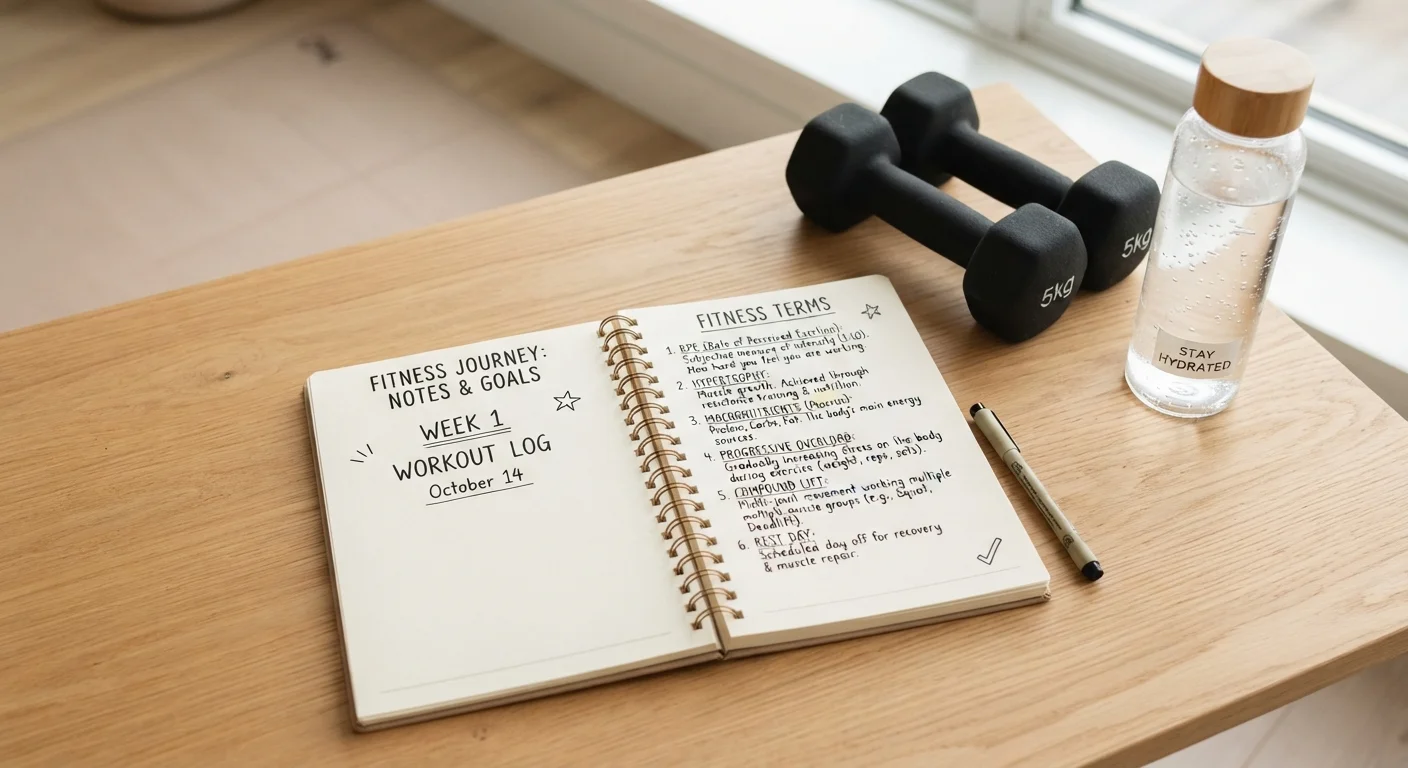
Photo credit: InfoHorizon.net | Access To Informative Content
In this article
From reps and sets to VO2 max and RPE, a plain-language reference guide to the most common fitness terminology you'll encounter when starting out.
Why Fitness Terminology Matters for Beginners
Walking into a gym or opening a workout app for the first time can feel like landing in a foreign country. Trainers talk about progressive overload, app programs reference RPE, and class schedules list things like HIIT and LISS without explanation. Feeling lost in the language is one of the most common — and most overlooked — barriers to starting an exercise routine.
This reference guide cuts through that barrier. The terms below are the ones you'll encounter repeatedly, whether you're following a beginner strength program, taking a group fitness class, or simply reading about exercise. Once you know what these words mean, you can focus on what actually matters: moving consistently and building habits that stick.
Before committing to any new program, it's also worth reviewing the practical factors that influence your readiness. Our practical self-assessment checklist covers health history, recovery capacity, and goal clarity in one place.
Rep (Repetition)
One complete execution of an exercise movement — for example, lowering into and rising out of a squat. Reps are the building blocks of any set.
Set
A group of consecutive reps performed without stopping to rest. For example, doing 10 push-ups, resting, then doing 10 more means you've completed two sets of 10 reps.
Progressive Overload
The practice of gradually increasing the demands placed on the body during exercise — through added weight, more reps, or shorter rest periods — to continue making fitness gains over time.
RPE (Rate of Perceived Exertion)
A self-reported scale, typically 1–10, measuring how hard an activity feels to you personally. It's a practical intensity guide that accounts for individual variation.
HIIT
High-Intensity Interval Training — a workout format that alternates short bursts of intense effort with rest or low-intensity recovery periods.
LISS
Low-Intensity Steady State cardio — sustained moderate-effort exercise performed at a consistent pace for an extended duration, such as a brisk walk or easy cycling session.
VO2 Max
The maximum rate at which your body can use oxygen during intense exercise. It's a widely used marker of cardiovascular fitness capacity.
Heart Rate Zones
Ranges of cardiovascular effort — usually five zones — based on percentages of your estimated maximum heart rate. Different zones target different physiological adaptations.
Compound Exercise
A movement that engages multiple muscle groups and joints simultaneously — such as a squat, deadlift, or bench press. Often contrasted with isolation exercises that target a single muscle.
Rest Interval
A deliberate pause between sets of exercise that allows your muscles and energy systems to partially recover before the next effort. Rest duration affects training outcomes.
Muscle Hypertrophy
The increase in muscle cell size as an adaptation to resistance training. It's the physiological process behind muscle growth and is stimulated by progressive overload over time.
Warm-Up
Low-intensity movement performed before a main workout to gradually elevate heart rate, increase blood flow to muscles, and prepare joints for more demanding activity.
Core Training Terms: From Reps to Recovery
The vocabulary below covers the foundational concepts you'll encounter across nearly every type of workout — strength training, cardio, and group classes alike.
| Recommended weekly activity (adults) | 150–300 min moderate-intensity or 75–150 min vigorous-intensity aerobic activity (U.S. Department of Health and Human Services Physical Activity Guidelines for Americans) |
| Strength training frequency guideline | At least 2 days per week, targeting major muscle groups (U.S. Department of Health and Human Services Physical Activity Guidelines for Americans) |
| Common beginner set-rep range | 2–3 sets of 8–12 reps per exercise (National Strength and Conditioning Association general guidance) |
| Typical rest interval (hypertrophy) | 60–90 seconds between sets (General exercise science consensus) |
| RPE scale range | 1 (minimal effort) to 10 (maximum effort) (Widely used in clinical and athletic settings) |
Intensity and Effort Measures
RPE (Rate of Perceived Exertion) is a self-reported scale — usually 1 to 10 — that describes how hard an activity feels. An RPE of 3 might be a comfortable walk; an RPE of 9 is near-maximum effort. Many programs use RPE precisely because two people doing the same exercise will have different physical responses to it.
Heart rate zones divide your cardiovascular effort into ranges — typically five — based on a percentage of your estimated maximum heart rate. Zone 2 (roughly 60–70% of max heart rate) is often associated with aerobic base-building; higher zones are used for more intense interval work. These zones are general guidelines, not clinical prescriptions, and individual responses vary.
Cardio Training Styles
HIIT (High-Intensity Interval Training) alternates short bursts of intense effort with rest or lower-intensity periods. LISS (Low-Intensity Steady State) means maintaining a consistent, moderate effort for a longer duration — think a 40-minute brisk walk or easy bike ride. Both have a place in a well-rounded program; neither is universally superior.
VO2 max refers to the maximum rate at which your body can consume oxygen during exercise. It's a common measure of cardiovascular fitness. You don't need to test it to benefit from cardio training — it's simply useful context when you see it referenced in fitness assessments or app data.
Strength Training Basics
A rep (repetition) is one complete movement — one squat, one push-up. A set is a group of consecutive reps performed without stopping. Rest intervals are the pauses between sets; they're deliberate and important for allowing muscles to partially recover before the next effort.
Progressive overload is the principle of gradually increasing the challenge placed on your body — by adding weight, reps, sets, or reducing rest — so that your fitness continues to improve over time. Without it, your body adapts and progress stalls.
This article is for informational purposes only and does not constitute medical or professional fitness advice. Consult a qualified healthcare provider or certified fitness professional before beginning a new exercise program, especially if you have existing health conditions.

Author
Health Editorial Team
Health Editorial Team is the collective byline for our editorial team and contributor network. Articles published under this byline or an editorial pen name are researched, written, and reviewed according to our editorial standards for clarity, consistency, and independence before publication.
View all articles →