
The 50/30/20 Rule vs. Zero-Based Budgeting
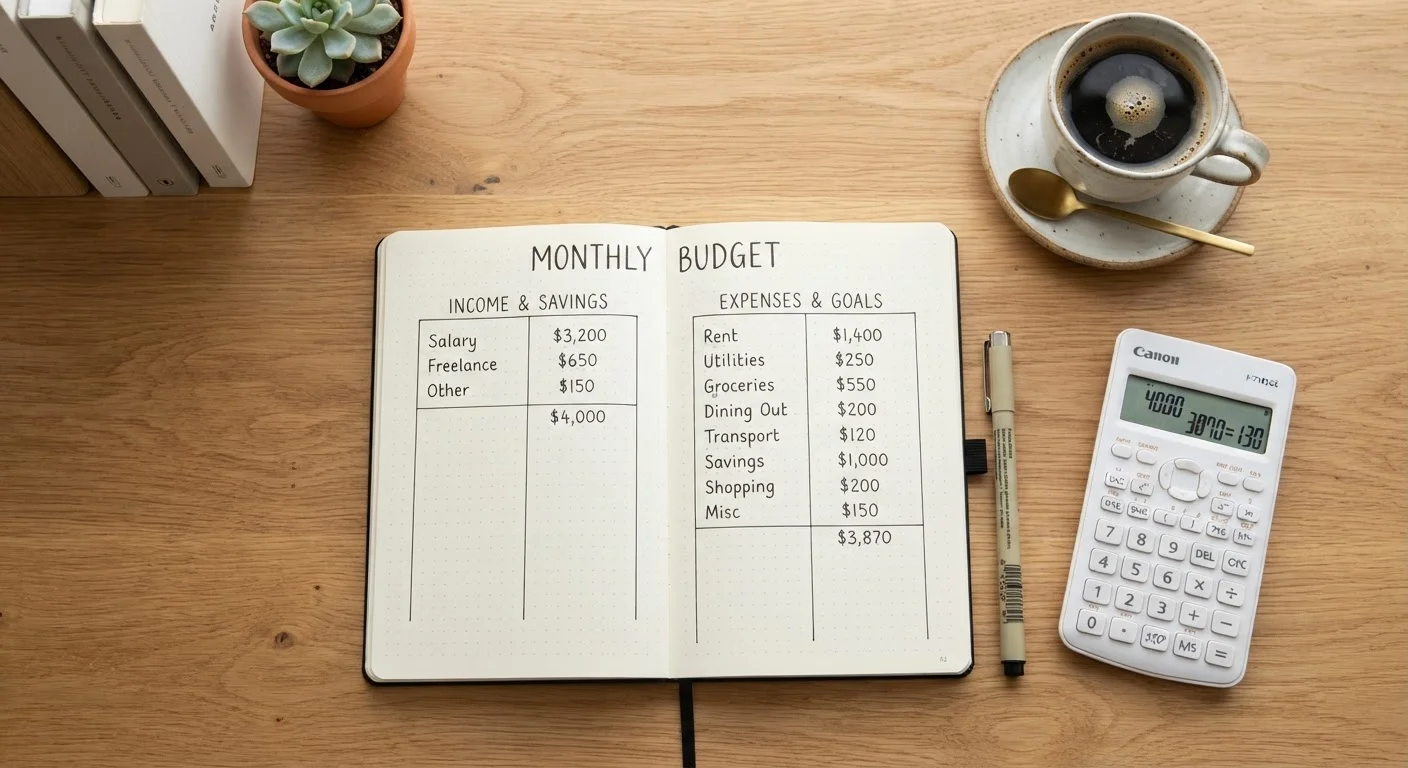
Photo credit: InfoHorizon.net | Access To Informative Content
In this article
Two of the most popular budgeting frameworks compared side by side — find out which approach fits your income, lifestyle, and financial goals.
Key Takeaways
- The 50/30/20 rule divides after-tax income into needs (50%), wants (30%), and savings or debt (20%).
- Zero-based budgeting assigns every dollar a job so income minus expenses equals zero each month.
- The 50/30/20 rule is easier to start and maintain; zero-based budgeting offers more granular control.
- Neither method is universally superior — the right choice depends on your income stability and financial goals.
- Both frameworks can be adjusted over time as your circumstances and priorities change.
How Each Framework Works
Understanding how these two methods are structured helps clarify what you're actually signing up for before committing to either one. If you're brand new to budgeting, start with foundational budgeting concepts before deciding which framework fits best.
The 50/30/20 Rule
Popularized by Senator Elizabeth Warren and her daughter Amelia Warren Tyagi in their 2005 book All Your Worth, the 50/30/20 rule divides your monthly after-tax income into three broad buckets:
- 50% for needs: Housing, utilities, groceries, transportation, minimum debt payments, and insurance.
- 30% for wants: Dining out, subscriptions, entertainment, hobbies, and non-essential shopping.
- 20% for savings and debt repayment: Emergency fund contributions, retirement accounts, and paying down debt beyond minimums.
The appeal is simplicity. You don't track individual purchases — you monitor whether your broad spending stays within each band.
Zero-Based Budgeting
Zero-based budgeting (ZBB) works differently. Each month, you start with your expected income and assign every dollar a specific category — housing, food, gas, savings, entertainment — until income minus all assigned expenses equals zero. No dollar goes unaccounted for.
This doesn't mean spending everything. Savings and investments are themselves budget categories. The goal is intentional allocation, not a zero bank balance. A step-by-step monthly budget walkthrough can help you apply ZBB mechanics in practice.
Side-by-Side Comparison
The differences between these two methods show up most clearly when you examine specific practical dimensions.
| Criterion | 50/30/20 Rule | Zero-Based Budgeting |
|---|---|---|
| Setup time | Minimal — three categories | Higher — detailed monthly plan |
| Ongoing maintenance | Low — periodic check-ins | High — monthly rebuild required |
| Spending visibility | Broad category level | Full, line-by-line detail |
| Best income type | Stable, predictable income | Any income, especially variable |
| Flexibility | High within each bucket | Lower — requires reallocation |
| Debt payoff focus | Moderate — fixed 20% target | Strong — fully customizable |
| Learning curve | Very low | Moderate to high |
One nuance worth noting: the 50/30/20 rule's percentages are guidelines, not rigid rules. Someone with high fixed costs — like rent in an expensive city — may find that needs consume 60% or more of income. Adjusting the ratios to reflect your actual reality is entirely reasonable. Common budgeting myths often include the idea that you must follow percentage rules exactly — that's not the case.
Strengths and Limitations of Each Method
50/30/20: What Works and What Doesn't
The 50/30/20 rule's greatest strength is accessibility. It requires no spreadsheet, no app, and no detailed categorization. For people who have historically avoided budgeting because it felt overwhelming, this framework offers a low-friction entry point.
Its limitation is that broad categories can mask problematic patterns. If your "wants" bucket is consistently overfull, the rule won't tell you which specific habit is driving the problem. People with tight margins — where needs alone exceed 50% of income — may also find the framework unrealistic without significant adjustment.
Zero-Based Budgeting: What Works and What Doesn't
ZBB's precision is its strongest attribute. By assigning every dollar before the month begins, you make deliberate choices rather than reactive ones. Research consistently shows that intentional pre-commitment to spending decisions improves financial outcomes compared to tracking after the fact.
The tradeoff is time and discipline. Building a zero-based budget at the start of each month takes effort, and irregular income — from freelance work or variable hours — makes it harder to project allocations accurately. Overspending in one category means manually redistributing money from another, which some people find tedious. For a complementary tool-based approach, see how envelope budgeting compares with digital tracking apps.
74%
Americans living paycheck to paycheck
A 2023 LendingClub survey found nearly three in four Americans reported living paycheck to paycheck, underscoring how critical a workable budgeting system can be.
~32%
Adults with a detailed monthly budget
Gallup polling has consistently found that fewer than one in three U.S. adults maintain a detailed household budget, despite widespread awareness of their importance.
Choosing the Right Method for Your Situation
The honest answer is that the best budgeting method is the one you'll actually use consistently. Both frameworks are tools, not moral judgments about how you manage money.
Consider the 50/30/20 rule if you have a steady paycheck, relatively predictable expenses, and want a low-maintenance system to stay broadly on track. It also works well as a transition framework — something to use while you build the budgeting habit before moving to a more detailed method.
Consider zero-based budgeting if you're trying to accelerate debt payoff, save for a specific goal on a defined timeline, or simply want complete visibility into where your money is going. It also suits people whose variable income requires monthly recalibration anyway. You can learn more about how savings targets factor into both frameworks by exploring how much you should realistically be saving.
You Don't Have to Pick Just One
Some people use a hybrid approach: the 50/30/20 rule to set overall guardrails, combined with zero-based allocation within specific categories like dining or entertainment. There's no requirement to follow either framework in its pure form. What matters is that your system reflects your actual income, expenses, and priorities — not an idealized version of them.
Once you've chosen a method, building a regular review habit is what turns a budget into a financial tool that improves over time. A monthly budget audit checklist can help you catch spending drift before it becomes a bigger problem.
This article is for general informational and educational purposes only and does not constitute personalized financial advice. For guidance tailored to your specific financial situation, consult a licensed financial professional.

Author
Finance Editorial Team
Finance Editorial Team is the collective byline for our editorial team and contributor network. Articles published under this byline or an editorial pen name are researched, written, and reviewed according to our editorial standards for clarity, consistency, and independence before publication.
View all articles →