
Trade-In vs. Private Sale: Getting the Most From Your Current Vehicle
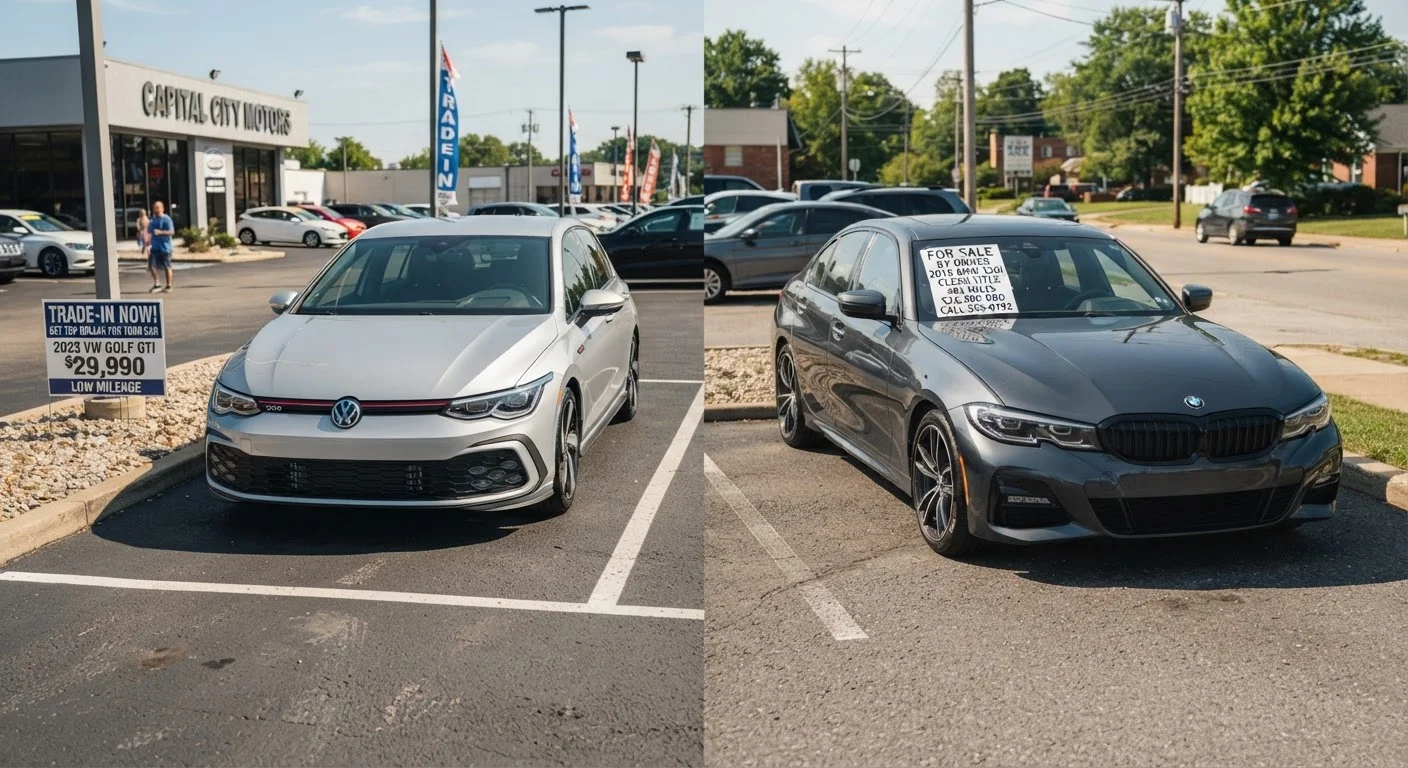
Photo credit: InfoHorizon.net | Access To Informative Content
In this article
Convenience or maximum return? Compare what each option typically yields and what each one demands from you.
Key Takeaways
- Private sales typically return more money but require significantly more time and effort from the seller.
- Dealer trade-ins offer speed and simplicity, often applied directly to your next purchase as a down payment.
- Tax savings on trade-ins in many states can partially close the gap between dealer offers and private sale prices.
- Your vehicle's condition, your timeline, and your tolerance for negotiation all influence which path makes more sense.
- Getting multiple valuations before committing gives you a stronger baseline - regardless of which route you choose.
The Core Trade-Off: Convenience vs. Cash
When it's time to move on from your current vehicle, you generally have two paths: hand it over to a dealership as a trade-in, or sell it yourself to a private buyer. Both get the car out of your driveway, but they work very differently - and they produce different outcomes in terms of effort, timing, and money.
A trade-in happens at the dealership when you're purchasing your next vehicle. The dealer appraises your car, offers you a value, and applies it toward your new purchase. A private sale means listing the vehicle yourself, fielding inquiries, arranging showings, negotiating with individual buyers, and handling the paperwork independently. The process is more involved, but the price you walk away with is typically higher.
Understanding what each path actually demands - not just what it pays - is the most useful starting point. If you're also weighing the broader decision of what to buy next, our guide on new vs. used vehicles covers the downstream factors worth considering before you commit.
What to Expect From a Dealer Trade-In
Dealer trade-ins are designed for efficiency. You bring your vehicle in, the dealer assesses its condition and market value, and you receive an offer - often within an hour. If you accept, that amount is deducted from the price of your next car, reducing what you need to finance or pay out of pocket.
The convenience comes at a cost. Dealers typically offer less than what the open market would bear because they need to account for reconditioning, storage, and their own resale margin. However, the dollar difference may be smaller than it first appears once you factor in one significant benefit: in most U.S. states, sales tax on a new vehicle purchase is calculated on the price after the trade-in value is subtracted. On a vehicle with a $10,000 trade-in value, that tax savings can add up to several hundred dollars depending on your state's rate.
Get Multiple Appraisals First
Before deciding on either path, obtain appraisals from at least two or three sources - including independent dealers and any online vehicle valuation tools you trust. This gives you a realistic range rather than a single data point. A strong documented offer from one source can also be used as leverage if you do pursue a trade-in.
Getting appraisals from multiple dealers - or from third-party appraisal services - before walking into a negotiation gives you a documented baseline. An informed seller is harder to lowball.
Once the deal is signed, dealership add-ons at signing are the next thing to understand clearly before you leave the finance office.
What to Expect From a Private Sale
Selling privately puts you in direct contact with buyers through classified listings, social marketplaces, and automotive platforms. Because there's no middleman taking a margin, sellers typically net more money - sometimes meaningfully more for vehicles in high demand or excellent condition.
The trade-off is real. You'll need to prepare the vehicle (cleaning, minor repairs, photography), write a compelling listing, respond to inquiries, screen buyers, arrange safe meeting locations or test drives, and manage the title transfer and bill of sale correctly. In many states, you'll also need to notify your DMV of the sale to avoid liability if the buyer gets a ticket or is in an accident before re-registering.
| Dealer Trade-In | Private Sale | |
|---|---|---|
| Typical sale price | Below market value | Closer to market value |
| Time to complete | Same day | Days to several weeks |
| Seller effort required | Minimal | Significant |
| State sales tax benefit | Yes, in most states | No offset available |
| Negotiation involved | With dealer only | With individual buyers |
| Paperwork handling | Dealer manages it | Seller responsible |
| Risk of scams or fraud | Very low | Moderate - requires caution |
If you're exploring the full buying process digitally, buying a car entirely online offers a practical look at how that process unfolds from start to finish - which may influence how you approach your simultaneous sale.
Key Factors That Should Drive Your Decision
No single calculation fits every seller. These are the variables that most directly affect which option makes practical sense for your situation:
- Vehicle condition: Vehicles that are clean, well-maintained, and have documented service histories command stronger premiums on the private market. Vehicles with high mileage, cosmetic damage, or mechanical issues are harder to sell privately - dealers, by contrast, are practiced at pricing and moving imperfect inventory.
- Your timeline: A trade-in can close in a single afternoon. A private sale can take days or weeks, depending on demand and how you price the vehicle.
- State tax rules: The trade-in tax offset varies significantly by state. Check your state's DMV or tax authority website to understand how trade-in value affects your taxable purchase price.
- Financing plans: If you're taking out a loan on your next vehicle, consider how financing through a dealer vs. your bank or credit union interacts with how you're handling the sale of your current car.
- Comfort with negotiation: Private buyers negotiate, and some aggressively so. If that dynamic is stressful or unfamiliar, a dealer appraisal removes it entirely.
Private Sales Carry Scam Risks
Fraudulent buyers are an unfortunate reality in private vehicle sales. Be cautious of buyers who offer to pay above asking price, insist on unusual payment methods, or ask you to ship a vehicle before payment clears. Always meet in a safe, public location and insist on verified payment - such as a bank cashier's check confirmed directly with the issuing bank - before signing over the title.

Author
Cars Editorial Team
Cars Editorial Team is the collective byline for our editorial team and contributor network. Articles published under this byline or an editorial pen name are researched, written, and reviewed according to our editorial standards for clarity, consistency, and independence before publication.
View all articles →