
Questions Worth Asking Before You Sign Anything
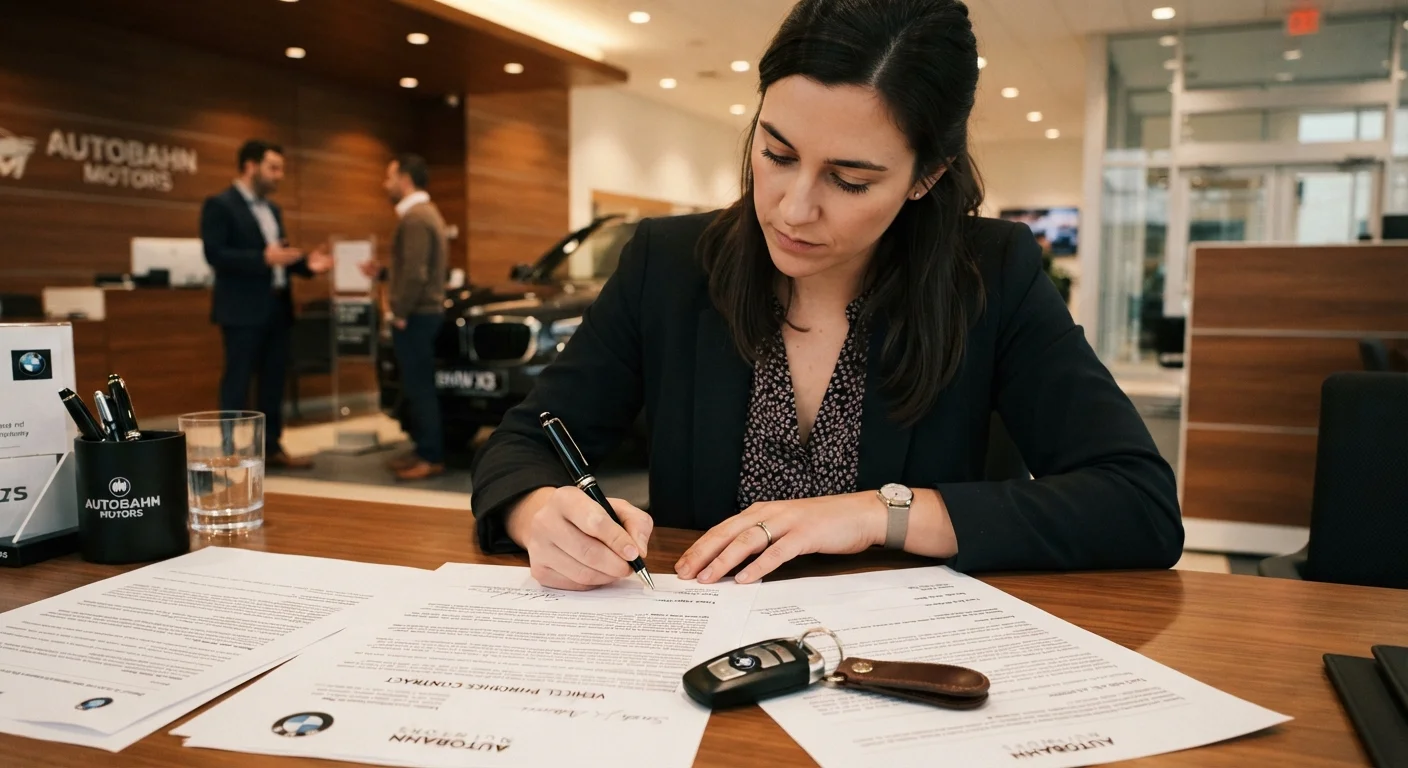
Photo credit: InfoHorizon.net | Access To Informative Content
In this article
A curated set of questions—about the vehicle, the financing, and the paperwork—that protect you at the final stage.
Key Takeaways
- Always request a complete itemized breakdown of every fee before signing any contract.
- Understand the exact financing terms - including APR, loan length, and total interest paid.
- Verify that all verbal promises from the salesperson appear in writing on the final documents.
- Know which add-on products are optional and which, if any, are truly required by the lender.
- Confirm the vehicle's history, current condition, and any remaining manufacturer warranty coverage.
Why the Final Stage Deserves Your Full Attention
The finance office - sometimes called the F&I (finance and insurance) office - is where a car deal is formally completed. It can also be where the cost of a vehicle quietly climbs. Fatigue, time pressure, and the sheer volume of paperwork conspire to rush buyers through documents that deserve careful reading.
The questions in this list are designed to cut through that pressure. They cover the vehicle itself, the financing structure, and the paperwork - the three areas where misunderstandings are most likely to surface later. For a broader view of how this moment fits into the overall process, see The Car-Buying Process, Start to Finish. If you want to prepare well before you even walk in, Before You Visit a Dealership: A Preparation Checklist walks through what to research and organize in advance.
This Article Is General Information
Contract terms, consumer protection laws, and dealership practices vary by state. The guidance here is intended as general education, not legal or financial advice. For questions specific to your situation or jurisdiction, consider consulting a licensed attorney or financial adviser before signing a major purchase agreement.
Questions That Matter Most at Signing
What does every line item on this contract represent?
Request an itemized breakdown of all fees before agreeing to a final price. Beyond the vehicle price, contracts commonly include documentation fees, dealer prep charges, destination fees, and government taxes and registration costs. Some fees are fixed by law; others are negotiable. You have every right to ask what each charge covers and whether it can be reduced or removed.
Some dealership fees are negotiable - you won't know which unless you ask.
What is the exact APR, loan term, and total amount I'll repay?
Monthly payment is only one dimension of a financing agreement. Ask for the annual percentage rate (APR), the length of the loan in months, and the total cost you'll pay over the full term - principal plus all interest. A lower monthly payment stretched over 72 or 84 months can mean paying significantly more than the vehicle's sticker price by the end of the loan.
A longer loan term lowers your monthly payment but increases total interest paid.
Does this contract reflect everything we agreed to verbally?
Verbal agreements made during negotiation - a free oil change package, a price reduction, an included accessory - carry no legal weight unless they appear in the written contract. Before signing, read every page and confirm that anything discussed is documented. If something is missing, ask for it to be added before you sign, not after.
Verbal promises are unenforceable; they must appear in writing to protect you.
Which add-on products are truly optional?
Finance managers are trained to present products such as extended service contracts, gap insurance, tire-and-wheel protection, and paint sealants as part of a package. Most of these are optional - not required by the lender - even if they're presented that way. Ask directly: "Is this required to complete the loan?" If the answer is no, you can decline, accept, or take time to research the product independently before deciding.
Most F&I add-on products are optional, even when presented as standard inclusions.
What does the vehicle history and current condition show?
For used vehicles, request the vehicle history report and ask whether an independent pre-purchase inspection was offered or completed. For new vehicles, ask about any open manufacturer recalls, existing damage noted on the lot, and the full terms of the factory warranty. Confirm whether any remaining warranty transfers to you as the new owner and under what conditions it could be voided.
Open recalls and undisclosed prior damage are facts a vehicle history report can surface.
What happens if I want to return or exchange the vehicle?
Unlike many retail purchases, most vehicle sales are final once the contract is signed. Dealerships are not legally required to offer a return window, though some may have their own policies. Ask explicitly whether any return or exchange policy exists, how long it lasts, and what conditions apply. Understanding this before you sign prevents misplaced assumptions afterward.
Most vehicle sales are final at signing - a return policy is a dealership option, not a legal right.
Take Your Time - Literally
It's reasonable to ask for 15-20 uninterrupted minutes to read the full contract before signing. If you want to have an attorney or trusted adviser review the documents, you may request copies in advance. A dealership that pressures you to skip this step is a dealership worth being cautious about.
Walking Out With Confidence
No reputable dealership should object to a buyer who asks questions or requests time to read documents thoroughly. If you feel rushed or notice that verbal commitments aren't reflected in the written contract, that's a signal to pause - not proceed. Every promise made during negotiation should appear in writing before you sign.
Add-on products presented at signing - such as extended warranties, gap insurance, or paint protection - are almost always optional. Understanding exactly what they cover and what they cost is worth your time. Understanding the Add-Ons Dealerships Offer at Signing breaks down each common product so you can evaluate them clearly. Once the ink is dry and you're on the road, Car Maintenance has the guidance you need to keep your new vehicle in reliable shape for the long term.

Author
Cars Editorial Team
Cars Editorial Team is the collective byline for our editorial team and contributor network. Articles published under this byline or an editorial pen name are researched, written, and reviewed according to our editorial standards for clarity, consistency, and independence before publication.
View all articles →