
Negotiating a Car Price Without the Pressure
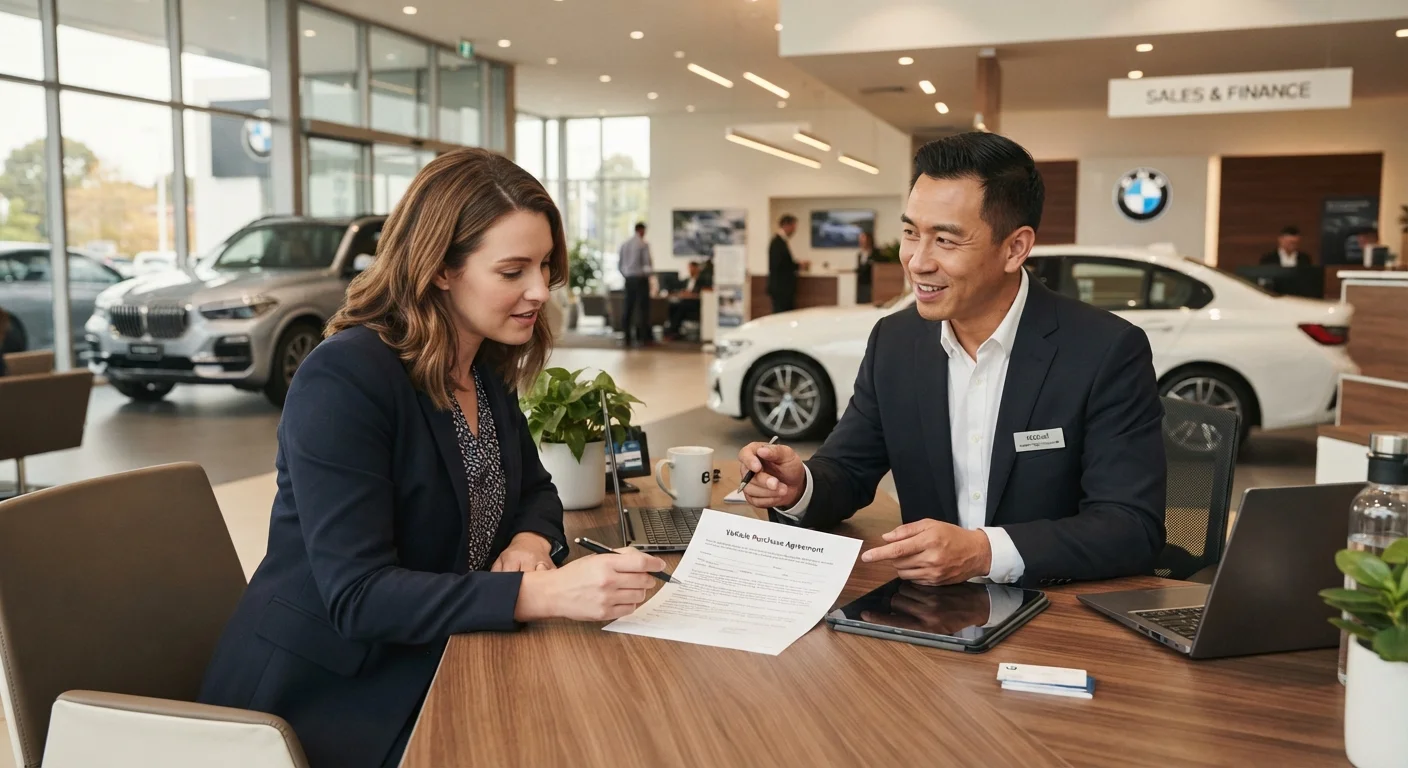
Photo credit: InfoHorizon.net | Access To Informative Content
In this article
Negotiation doesn't have to be stressful. Learn the mechanics of how car prices are set and where there's room to move.
Key Takeaways
- Understanding the difference between MSRP, invoice price, and dealer markup puts you in control.
- Researching market values before visiting a dealership is the single most effective preparation step.
- Negotiating the out-the-door price rather than monthly payments protects your overall budget.
- Walking away is a legitimate and often effective negotiating move.
- Financing and add-ons are separate negotiating points - keep them that way.
Why Car Price Negotiation Feels Hard - and How to Change That
For most buyers, negotiating a car price is uncomfortable because the information asymmetry feels overwhelming. Dealers do this every day; buyers do it once every several years. The good news is that the gap is much smaller than it appears. With a few hours of research and a clear process, you can engage in the negotiation as a prepared equal rather than a reactive participant.
The pressure often comes from manufactured urgency - claims that a vehicle won't last the weekend, or that a deal expires today. Understanding that these tactics are predictable makes them far less effective. The key is to be well-researched, have a clear price ceiling, and remain willing to pause or walk away. Much of what makes car shopping feel stressful also appears in other high-stakes purchases - for comparison, the dynamics in buying a home share some of the same psychology.
Many shoppers also carry beliefs about negotiation that simply aren't accurate anymore. For a closer look at what the evidence actually shows, see our piece on common car-buying myths that cost shoppers money.
What you will need
What You Need Before You Negotiate
Effective negotiation starts well before you arrive at a dealership. The tools and information below form your preparation layer - they replace guesswork with data and give you a principled basis for every number you discuss.
Market Price Research Tool (e.g., Edmunds, Kelley Blue Book)
Establishes a data-backed baseline for what others are actually paying for the same vehicle in your region.
Pre-Approval Letter from a Lender
Gives you an independent financing benchmark so you can compare - and potentially beat - the dealer's financing offer.
Trade-In Valuation
Knowing your trade's current market value prevents it from being undervalued during negotiation.
Learn the pricing layers before you arrive
Every car has multiple price points that matter to you: the MSRP (Manufacturer's Suggested Retail Price), the invoice price (what the dealer pays the manufacturer), and the actual transaction price - what buyers in your area are paying right now. MSRP is a starting point, not a ceiling or a floor. Dealer invoice is useful context, but dealer profit also comes from manufacturer incentives and holdbacks that aren't visible to you. The transaction price data from research tools is the most actionable number.
Get competing quotes before setting foot in a dealership
Contact multiple dealerships by email or phone and ask for their out-the-door price for the exact vehicle - including taxes, title, registration, and all dealer fees. This accomplishes two things: it creates genuine competition, and it removes much of the in-person pressure before you arrive. When you do visit, you're comparing offers, not starting from zero. This approach is one of the most reliable ways to shift the dynamic in your favor. For a broader view of how supply and demand affect the deal you can get, see our article on buyer's vs. seller's market dynamics.
Negotiate the vehicle price first - separately from everything else
One of the most common mistakes buyers make is allowing the conversation to shift to monthly payments before agreeing on a vehicle price. Dealers can adjust loan terms, down payment amounts, and trade-in values to hit a payment target while leaving you paying more overall. Agree on the total vehicle price first. Once that number is settled, then discuss financing, trade-ins, and add-ons as separate, independent transactions.
Make a reasonable opening offer - and explain it
Base your opening offer on your market research, not on a random percentage below MSRP. Present it as informed rather than arbitrary: 'Based on what similar vehicles are selling for in this area, I'm prepared to offer [X].' This signals that you're a serious, knowledgeable buyer - not someone making a lowball offer to open a haggle. Be polite and direct. You don't need to apologize for negotiating; it's a standard part of the process.
Be prepared to walk - and mean it
The most powerful position in a negotiation is genuine willingness to leave. If the deal doesn't reach a price you've determined is fair based on your research, thank the salesperson and exit calmly. This isn't a bluff - it's a decision boundary. In many cases, a follow-up call or email within 24-48 hours reflects a revised offer. If it doesn't, another dealership or a different vehicle may better fit your budget. The full car-buying process has more context on how to approach each stage with confidence.
Review the final paperwork carefully before signing
Once you've reached an agreed price, the finance office will present a contract with line items you should verify against what was discussed. Confirm the vehicle price, any agreed dealer fees, financing terms (if applicable), and any add-ons. If an item appears that was not discussed, ask for it to be explained or removed. Never feel rushed at this stage - reviewing carefully is your right as a buyer. Before finalizing, consult our guide on questions worth asking before you sign.
After the Deal: What to Watch For
A signed purchase agreement is not necessarily the end of the process. If your vehicle requires service down the road, being as informed with your mechanic as you were with your dealer matters just as much. Our guide on questions to ask before you head to the mechanic applies the same principle - knowledge reduces the likelihood of unnecessary upsells.
Add-Ons Can Quietly Add Thousands
The finance office is where many deals unravel for buyers. Extended warranties, paint protection, gap insurance, and other products are presented after you've already committed emotionally. Many of these products are available elsewhere at lower prices or may not be necessary at all. Review each add-on independently and never feel obligated to decide on the spot.
Negotiating a car price well is ultimately about being informed, patient, and clear on your limits. The steps above give you a repeatable framework you can apply whether you're buying new, certified pre-owned, or used.

Author
Cars Editorial Team
Cars Editorial Team is the collective byline for our editorial team and contributor network. Articles published under this byline or an editorial pen name are researched, written, and reviewed according to our editorial standards for clarity, consistency, and independence before publication.
View all articles →